Water-Cooled Chillers: Basics, Uses, Benefits and Trends
Water-cooled chillers are central cooling systems used in commercial buildings and industrial facilities. Learn how they work, where they are used, recent refrigerant trends, and key regulatory considerations.
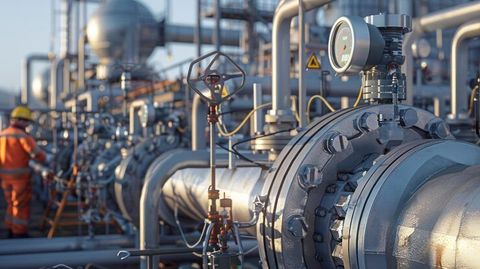
A water-cooled chiller is a mechanical cooling system that removes heat from water and uses that chilled water to cool buildings, equipment, or industrial processes. Unlike air-cooled chillers, which reject heat directly into surrounding air, water-cooled systems typically transfer heat through a condenser water loop connected to a cooling tower.
The basic process involves several components working together:
- Compressor: Raises the refrigerant pressure and temperature.
- Condenser: Transfers heat from the refrigerant into condenser water.
- Expansion device: Reduces refrigerant pressure.
- Evaporator: Transfers heat from the chilled-water loop into the refrigerant.
The cooled water is then circulated through air-handling equipment, process equipment, or other heat exchangers.
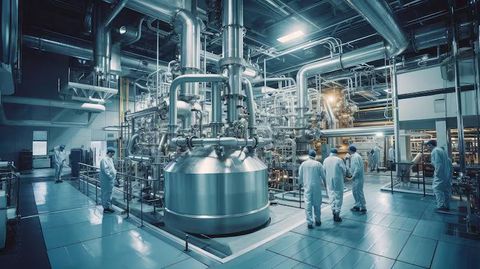
Water-cooled chillers are commonly associated with large commercial buildings, manufacturing facilities, data centers, hospitals, campuses, and other applications requiring centralized cooling.
Why Water-Cooled Chillers Matter
Cooling can represent a significant portion of energy use in large facilities. This makes chiller efficiency, HVAC energy management, and industrial cooling systems important considerations for facility planners and engineers.
Water-cooled chillers can be particularly useful where a continuous cooling load exists and sufficient space is available for condenser-water equipment.
They can help address several practical requirements:
- Maintaining comfortable indoor temperatures in large buildings
- Supporting temperature-sensitive manufacturing processes
- Managing heat generated by computing and electronic equipment
- Providing centralized cooling across multiple zones
- Supporting consistent process temperatures
The technology also connects with broader topics such as commercial HVAC systems, industrial refrigeration, energy-efficient cooling, and building automation systems.
Key System Considerations
Performance depends on factors such as chilled-water temperature, condenser-water temperature, load profile, heat-exchanger condition, compressor technology, and control strategy.
Common performance measurements include Coefficient of Performance (COP), Integrated Part Load Value (IPLV), and kW per ton. These metrics help engineers compare operational efficiency under different conditions.
| Factor | What It Indicates |
|---|---|
| COP | Cooling output relative to energy input |
| kW/ton | Electrical input associated with cooling capacity |
| IPLV | Performance across varying load conditions |
| Chilled-water temperature | Cooling level delivered to the application |
Recent Updates and Industry Trends
Refrigerant selection has become an important part of modern chiller planning. Lower-global-warming-potential refrigerants are receiving greater attention as governments introduce measures addressing hydrofluorocarbons (HFCs).
In the United States, the Environmental Protection Agency's Technology Transitions Program established restrictions affecting new chillers. For comfort-cooling chillers, a GWP limit of 700 applies to specified HFC refrigerants beginning January 1, 2025. For certain industrial-process chiller applications with exiting fluid above -30°C (-22°F), a 700 GWP limit applies from January 1, 2026.
During 2025, regulatory activity also continued around refrigerant transition requirements. The EPA published a proposed rule in September 2025 that considered changes to parts of the Technology Transitions framework.
Current industry trends include:
- Low-GWP refrigerant adoption
- Variable-speed compressor technology
- Smart chiller controls
- Automated performance monitoring
- Heat-recovery configurations
- Improved part-load efficiency
- Integration with building management systems
Laws, Policies and Environmental Considerations
Regulatory requirements vary by country, application, refrigerant, equipment type, and capacity.
In the United States, the American Innovation and Manufacturing (AIM) Act provides the foundation for federal HFC phasedown measures. EPA's Technology Transitions Program establishes sector-specific restrictions and compliance dates.
For organizations planning new cooling equipment, refrigerant GWP, equipment classification, installation dates, and applicable federal or local requirements should be reviewed before selecting a system.
Other regions have introduced similar refrigerant policies. For example, the European Union's F-gas framework includes restrictions affecting stationary chillers, with additional requirements scheduled for 2027 and later depending on chiller capacity and refrigerant GWP.
Tools and Resources for Learning
Useful resources for understanding water-cooled chiller technology include:
- Chiller sizing calculators
- Cooling-load calculation worksheets
- COP and kW-per-ton calculators
- Refrigerant GWP comparison tables
- HVAC commissioning checklists
- Preventive inspection templates
- Building energy-monitoring dashboards
- Government refrigerant-regulation databases
- Manufacturer-neutral HVAC engineering guides
- Technical training materials for refrigeration systems
These resources can help users understand system performance without relying solely on equipment specifications.
Frequently Asked Questions
How does a water-cooled chiller work?
It removes heat from circulating chilled water through a refrigeration cycle. Heat is then transferred to condenser water and typically rejected through a cooling tower.
Where are water-cooled chillers commonly used?
They are often used in large commercial buildings, industrial facilities, campuses, data centers, and applications requiring centralized cooling.
What is the difference between water-cooled and air-cooled chillers?
A water-cooled chiller rejects condenser heat through a water loop, usually connected to a cooling tower. An air-cooled chiller rejects heat directly to outdoor air.
Why is refrigerant GWP important?
GWP indicates the relative climate-warming impact of a refrigerant. Regulations increasingly address high-GWP refrigerants, making refrigerant selection an important planning consideration.
Are water-cooled chillers energy efficient?
Efficiency varies considerably by design, operating conditions, load, controls, and maintenance. Metrics such as COP and kW per ton can be used to evaluate performance.
Conclusion
Water-cooled chillers remain an important technology for centralized commercial HVAC and industrial cooling applications. Their operation combines refrigeration, heat transfer, water circulation, and control systems to manage substantial cooling loads.
The industry is also changing as energy efficiency, smart controls, and lower-GWP refrigerants become increasingly important. Understanding system fundamentals and applicable regulations can help facility planners, engineers, and general readers make more informed decisions about modern cooling technology.
Disclaimer: This article is provided for general educational purposes. Refrigerant requirements, technical standards, and regulatory deadlines can change and may vary by location and application. Qualified professionals and applicable government authorities should be consulted for project-specific compliance decisions.