Refinery Process Equipment: A Complete Guide to Key Systems
Refinery process equipment includes the vessels, pumps, heat exchangers, columns, reactors, compressors, and control systems used to transform crude oil into usable petroleum products.
Refinery process equipment forms the physical foundation of modern petroleum refining. A refinery takes crude oil, separates it into different fractions, and processes those fractions into products such as gasoline, diesel, jet fuel, lubricants, and petrochemical feedstocks.
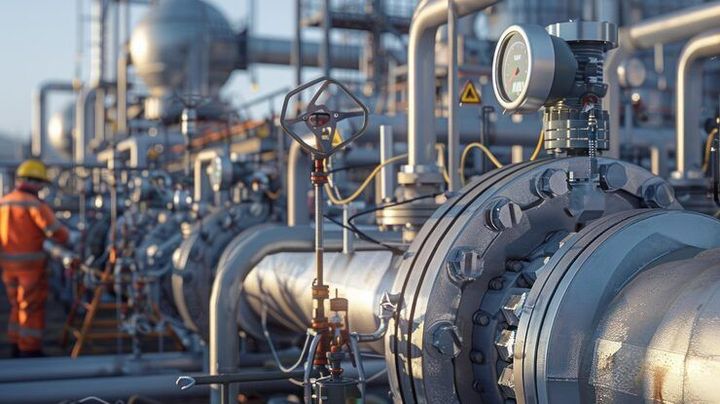
The process requires carefully designed equipment because refining involves high temperatures, pressures, flammable materials, and chemical reactions. Common refinery equipment includes distillation columns, heat exchangers, pressure vessels, pumps, compressors, reactors, storage tanks, valves, and process control systems.
The equipment works as an interconnected system rather than as isolated machines. For example, crude oil may first pass through heat exchangers before entering an atmospheric distillation unit. Different fractions are then processed further through systems such as catalytic cracking, reforming, hydroprocessing, or sulfur recovery.
Importance of Refinery Equipment
Reliable process equipment is important because refinery operations depend on continuous control of temperature, pressure, flow, and chemical composition.
Modern industrial process equipment helps operators manage several important requirements:
- Separating crude oil into useful fractions
- Controlling heat transfer and energy use
- Supporting chemical conversion processes
- Managing pressure and fluid movement
- Monitoring process conditions
- Controlling emissions and potential releases
- Maintaining mechanical integrity and operational safety
Equipment condition also affects process safety. Pressure vessels, piping, pumps, relief systems, emergency shutdown systems, sensors, alarms, and interlocks all have important safety roles. OSHA's process safety requirements specifically identify these categories as equipment subject to mechanical-integrity provisions.
For refinery operators and engineering teams, process safety management, equipment inspection, predictive maintenance, and instrumentation are therefore closely connected.
Major Types of Refinery Process Equipment
Distillation Equipment
Distillation columns separate crude oil according to differences in boiling characteristics. Atmospheric and vacuum distillation units are among the fundamental systems in a refinery.
Heat Transfer Equipment
Heat exchangers transfer heat between process streams. They can help recover thermal energy from hot streams and reduce the amount of external heating required.
Reaction Equipment
Reactors support chemical conversion processes. Examples include hydroprocessing reactors and catalytic reforming systems. Their design must account for temperature, pressure, catalysts, and feed composition.
Pumps and Compressors
Pumps move liquids through refinery piping, while compressors handle gases and vapors. Both are essential for maintaining controlled material flow.
Instrumentation and Control Systems
Sensors, transmitters, alarms, control valves, distributed control systems, and safety instrumented systems help monitor and regulate refinery processes.
Recent Refinery Equipment Trends
The refining industry is experiencing changing market conditions and increasing attention to efficiency, emissions, and operational flexibility. In its Oil 2025 report published in June 2025, the International Energy Agency projected that global refined-product demand could peak in 2027 at 86.3 million barrels per day. It also projected 4.2 million barrels per day of new refining capacity by 2030, alongside 1.6 million barrels per day of closures.
These developments encourage greater attention to equipment efficiency and plant adaptability. Digital monitoring, advanced process control, condition monitoring, automation, and data-based maintenance are increasingly relevant areas for modern refinery engineering.
Environmental performance is another important trend. Refinery equipment such as flare systems, vapor controls, sulfur recovery units, wastewater systems, and emissions-monitoring equipment is increasingly evaluated alongside conventional production equipment.
Laws, Standards, and Policies
Refinery equipment is affected by different environmental, occupational safety, pressure-equipment, fire-safety, and process-design requirements depending on the country.
In the United States, OSHA's Process Safety Management standard, 29 CFR 1910.119, covers mechanical-integrity requirements for pressure vessels, storage tanks, piping, relief systems, emergency shutdown systems, controls, and pumps. It also requires documented inspection and testing procedures based on recognized engineering practices.
Environmental requirements also apply. The U.S. EPA maintains petroleum-refinery standards covering hazardous air pollutants, volatile organic compounds, refinery process units, wastewater systems, and other emission sources. EPA updated its petroleum-refinery regulatory information in March and June 2026.
Specific requirements vary by jurisdiction, so refinery projects should use the applicable national and local regulations together with recognized engineering standards.
Tools and Resources for Learning
Useful resources for understanding refinery process equipment include:
- Process flow diagrams and P&IDs
- Heat-transfer and pressure-drop calculators
- Equipment inspection checklists
- Process simulation software
- Equipment datasheet templates
- Preventive and predictive maintenance templates
- Process safety analysis worksheets
- Emissions calculation tools
- Industrial instrumentation guides
- Engineering standards and technical handbooks
These resources can help readers understand how individual equipment items interact within a complete refinery process.
FAQs About Refinery Process Equipment
What is refinery process equipment?
It is the collection of mechanical, thermal, chemical, electrical, and control equipment used to process crude oil into refined petroleum products.
What is the most important refinery equipment?
There is no single most important item. Distillation columns, heat exchangers, reactors, pumps, compressors, piping, instrumentation, and safety systems all perform essential functions.
Why are heat exchangers used in refineries?
Heat exchangers transfer thermal energy between process streams. They can support temperature control and improve overall energy management.
How is refinery equipment monitored?
Equipment may be monitored using pressure and temperature sensors, vibration monitoring, flow measurement, corrosion inspection, thickness testing, alarms, and computerized control systems.
Why is equipment inspection important?
Inspection helps identify degradation, defects, leaks, corrosion, or other conditions that could affect safe and reliable operation. Mechanical-integrity programs are a formal requirement for covered processes under U.S. OSHA rules.
Conclusion
Refinery process equipment combines separation, heat transfer, chemical conversion, fluid movement, measurement, and safety functions into one interconnected industrial system. Understanding these equipment categories makes it easier to understand how crude oil is transformed into useful products.
Current industry developments point toward greater attention to operational flexibility, emissions management, automation, energy efficiency, and equipment integrity. As refining technologies evolve, strong engineering practices and appropriate regulatory compliance remain essential.
Disclaimer:
This article is provided for general educational purposes. Refinery equipment design, operation, inspection, and regulatory compliance require qualified engineering professionals and applicable local regulations. Requirements can differ by country, facility, process, and equipment type.