Laboratory Research Equipment: A Practical Guide to Modern Essentials
Laboratory research equipment supports accurate experiments, controlled testing, sample analysis, and scientific discovery across universities, research centers, biotechnology facilities, and industrial laboratories.
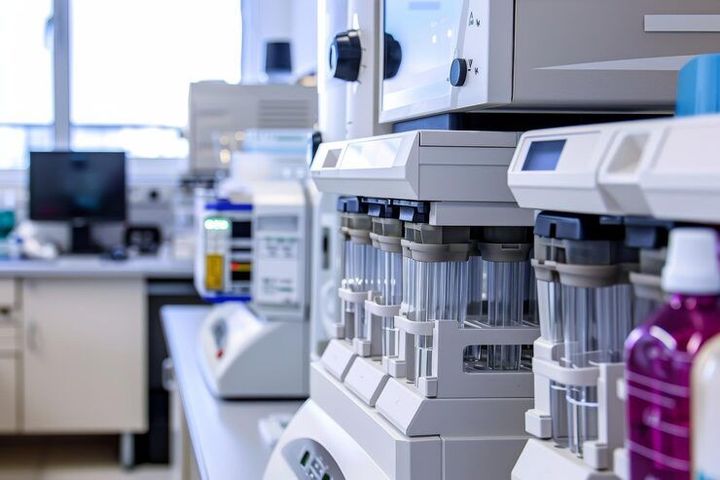
Laboratory research equipment includes instruments, devices, and supporting systems used to conduct scientific experiments and analyze samples. Depending on the research field, laboratories may use analytical instruments, microscopes, centrifuges, spectrometers, incubators, balances, thermal equipment, chromatography systems, and laboratory automation tools.
These systems exist because modern research requires controlled conditions and measurable results. A well-equipped laboratory can help researchers maintain consistent procedures, record observations, and generate data that can be reviewed and reproduced.
The appropriate equipment depends on the type of research. Chemistry laboratories may emphasize analytical chemistry equipment and chromatography, while biology laboratories may rely more heavily on molecular biology instruments, microscopy, incubators, and centrifugation systems.
Why Laboratory Equipment Matters Today
Research increasingly depends on accurate measurements, reliable data, and efficient workflows. Equipment therefore plays an important role in scientific research, biotechnology, environmental analysis, materials science, and academic laboratories.
Modern laboratory equipment can address several practical challenges:
- Maintaining controlled temperature, pressure, or humidity
- Separating and preparing samples
- Measuring physical and chemical properties
- Observing cells, materials, or microscopic structures
- Recording experimental data consistently
- Supporting laboratory quality control
- Reducing repetitive manual laboratory tasks
Equipment selection also affects laboratory workflow. For example, automated liquid handling can support repetitive sample preparation, while laboratory information management systems can help organize experimental records and results.
| Equipment Type | Common Research Use |
|---|---|
| Analytical balance | Precise mass measurement |
| Centrifuge | Sample separation |
| Spectrometer | Material and chemical analysis |
| Microscope | Cellular and structural observation |
| Incubator | Controlled biological environments |
| Chromatography system | Compound separation and analysis |
| Laboratory automation | Repetitive workflow tasks |
Recent Developments in Laboratory Research Equipment
Laboratory technology has continued moving toward automation, digital integration, robotics, and data-driven workflows. Research published in 2025 highlighted growing use of artificial intelligence, machine learning, robotics, and Internet-connected technologies within automated laboratory environments.
During 2026, collaborative robotics and mobile laboratory platforms have also received increased research attention, particularly for high-volume laboratory workflows. These technologies are designed to assist with repetitive activities while allowing researchers to focus on analytical and scientific decisions.
Another important development is greater emphasis on equipment connectivity. Digital instruments can increasingly transfer measurements into laboratory information systems, creating more organized experimental records and supporting data traceability.
Sustainability is also becoming relevant. Laboratories are examining energy-efficient equipment, improved resource management, and workflow designs that can reduce unnecessary consumption without compromising experimental requirements.
Regulations, Standards, and Laboratory Policies
Laboratory equipment is affected by different rules depending on the research field and country. In the United States, biological and biomedical laboratories commonly consider federal requirements alongside institutional biosafety procedures.
A notable recent development was the March 18, 2026 publication of the sixth edition of Biosafety in Microbiological and Biomedical Laboratories (BMBL) by the CDC and NIH. The document emphasizes protocol-driven risk assessment and provides biosafety best-practice guidance; it is advisory rather than itself a regulatory document.
For testing and calibration laboratories, ISO/IEC 17025:2017 remains the current international standard. It addresses laboratory competence, impartiality, and consistent testing and calibration practices and was confirmed as current in 2023.
Equipment may therefore need appropriate calibration, maintenance records, operating procedures, safety controls, and documentation depending on its application.
Tools and Resources for Laboratory Planning
Researchers and laboratory managers can use several practical resources when organizing equipment and workflows:
- Equipment inventory spreadsheets
- Calibration tracking templates
- Laboratory risk-assessment forms
- Sample-tracking worksheets
- Experimental planning templates
- Unit-conversion and dilution calculators
- Statistical analysis tools
- Laboratory information management systems
- Equipment maintenance schedules
- Standard operating procedure templates
A useful planning approach is to match every instrument to its intended measurement, required accuracy, environmental conditions, sample type, and data-recording method.
Frequently Asked Questions
What is laboratory research equipment?
Laboratory research equipment consists of instruments and supporting devices used for experimentation, measurement, sample preparation, observation, and scientific analysis.
What equipment is commonly found in research laboratories?
Common examples include microscopes, centrifuges, analytical balances, incubators, spectrometers, chromatography systems, thermal equipment, and automated laboratory instruments.
Why is calibration important?
Calibration helps determine whether an instrument's measurements remain within an appropriate level of accuracy. Documentation can also support quality assurance and traceability.
Is laboratory automation replacing researchers?
No. Automation primarily handles selected repetitive or standardized activities. Researchers remain responsible for experimental design, interpretation, validation, and scientific decisions.
What standards can apply to laboratory equipment?
Requirements depend on the laboratory's purpose and jurisdiction. ISO/IEC 17025:2017 is particularly relevant to testing and calibration laboratories, while specialized safety frameworks can apply to biological research.
Conclusion
Laboratory research equipment forms the practical foundation of modern scientific investigation. From basic measurement instruments to automated analytical platforms, each system has a specific role in producing controlled and interpretable data. Current developments are increasingly connecting laboratory equipment with automation, robotics, digital records, and advanced data analysis.
The most appropriate equipment should be selected according to the research objective, measurement requirements, safety considerations, documentation needs, and applicable standards rather than technology trends alone.
Disclaimer:
This article provides general educational information and is not a substitute for laboratory-specific safety procedures, regulatory guidance, accreditation requirements, or professional scientific judgment. Requirements can differ according to country, research activity, and laboratory classification.