Industrial Filtration Equipment: Guide, Uses, Trends and Insights
Industrial filtration equipment helps remove unwanted particles, contaminants, and impurities from air, liquids, gases, and industrial process streams.
Industrial filtration equipment is designed to separate unwanted materials from air, liquids, gases, and process streams. It is widely used in manufacturing, chemical processing, food production, pharmaceuticals, mining, energy, and water treatment.
The basic purpose is straightforward: a filtration system allows a desired material to pass through while capturing particles or contaminants. Depending on the application, equipment can use filter cartridges, filter bags, membranes, filter presses, centrifugal systems, dust collectors, or specialized media.
Filtration exists because industrial processes often generate dust, suspended solids, oil droplets, chemicals, microorganisms, or other unwanted substances. Controlling these materials can help protect equipment, maintain process quality, and reduce environmental impact.
Common Industrial Filtration Types
| Filtration Type | Typical Application | Main Target |
|---|---|---|
| Air filtration | Manufacturing facilities | Dust and airborne particles |
| Liquid filtration | Process industries | Suspended solids |
| Gas filtration | Chemical processing | Particles and contaminants |
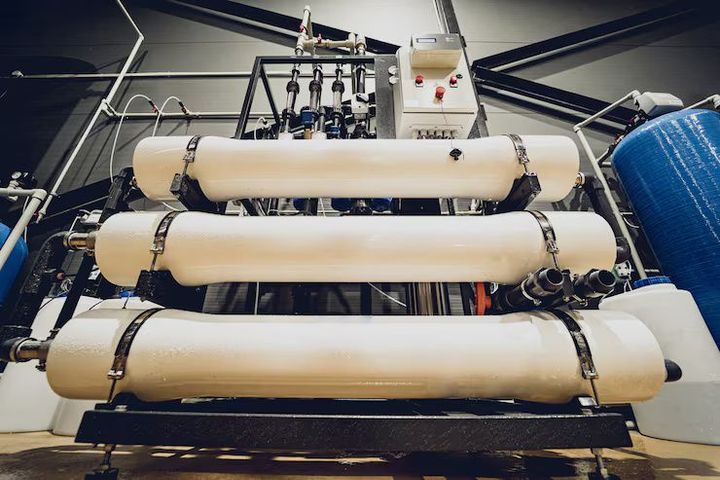
| Membrane filtration | Water treatment | Fine contaminants |
| Dust collection | Industrial production | Fine dust and particulates |
Why Industrial Filtration Matters
Modern manufacturing depends on controlled production environments. Unwanted particles can affect machinery, product consistency, workplace conditions, and downstream processes.
Industrial air filtration is particularly important where production activities generate dust, fumes, mist, or fine particles. Liquid filtration is equally important in industries that reuse process water or need to separate solids from liquids.
Filtration can also support resource efficiency. Cleaner process streams may allow water, fluids, or materials to be reused within an operation. In some applications, advanced filtration technologies can contribute to pollution prevention and improved process control.
The importance of filtration is also connected with environmental regulations. Industrial facilities may need to control emissions or wastewater discharges according to applicable national, state, or local requirements.
Recent Industrial Filtration Trends
During 2025 and 2026, industrial filtration technology continued moving toward automation, energy efficiency, advanced filter media, and real-time monitoring. Industry discussions increasingly highlight smart filtration systems that can monitor pressure differences, flow conditions, filter loading, and equipment performance.
Artificial intelligence and predictive monitoring are also emerging in process filtration. These technologies can analyze operating information and help identify changes that may indicate filter blockage or declining performance.
Another important trend is the development of advanced membrane materials and hybrid filtration systems. These approaches are being explored for applications involving water treatment, chemical processing, mining, and resource recovery.
PFAS treatment has also received significant attention. In May 2026, the U.S. Environmental Protection Agency announced a broader PFAS strategy that included treatment and destruction technologies and substantial funding for water systems.
Laws and Policies Affecting Filtration
In the United States, industrial filtration can be influenced by environmental and workplace requirements covering air emissions, wastewater, hazardous substances, and industrial processes.
The Clean Water Act establishes requirements for protecting water quality. Industrial wastewater discharges may be subject to technology-based effluent limitations and pretreatment standards. EPA's current framework includes categorical pretreatment standards for specific industrial categories.
The Pollution Prevention Act also encourages industries to reduce pollution at its source through changes in equipment, processes, materials, maintenance, and operating practices.
In 2026, EPA also proposed changes involving Clean Water Act Section 401 water-quality certification requirements.
Facilities should therefore evaluate filtration requirements according to their industry, location, pollutants, discharge pathway, and applicable permits. Regulations can differ significantly between jurisdictions.
Tools and Resources for Filtration Planning
Several general tools can help engineers and facility teams understand filtration requirements:
- Particle-size calculators: Estimate particle separation requirements.
- Flow-rate calculators: Help evaluate liquid or air flow through filtration equipment.
- Pressure-drop calculators: Compare pressure loss across filter media.
- Filter-selection worksheets: Organize information such as temperature, flow rate, particle size, and chemical compatibility.
- Air-quality monitoring tools: Measure particulate concentrations and environmental conditions.
- Water-quality testing tools: Evaluate suspended solids and other water characteristics.
- Regulatory databases: Help identify applicable environmental requirements.
- Maintenance checklists: Track inspection, cleaning, replacement, and performance measurements.
A basic filtration assessment should consider particle characteristics, flow rate, operating temperature, pressure, chemical compatibility, required filtration efficiency, and maintenance conditions.
Frequently Asked Questions
What is industrial filtration equipment?
It is equipment designed to separate unwanted particles or contaminants from industrial air, liquids, gases, or process streams.
What industries use industrial filtration?
Manufacturing, mining, chemical processing, food production, pharmaceuticals, energy, metal processing, and water treatment are among the major applications.
What factors affect filter selection?
Particle size, flow rate, temperature, pressure, chemical compatibility, filtration efficiency, and the characteristics of the process material are important factors.
What is membrane filtration?
Membrane filtration uses a selective barrier to separate materials based on properties such as particle size, molecular size, or pressure-driven separation characteristics.
Why is filtration monitoring important?
Monitoring can identify changes in pressure, flow, or filter loading. Early detection can help operators investigate performance problems before they affect a wider process.
Conclusion
Industrial filtration equipment is an important part of modern production and environmental control. Its applications range from removing airborne dust to separating suspended solids and treating complex industrial water streams.
Recent developments are moving filtration toward smarter monitoring, advanced materials, automation, and greater resource efficiency. At the same time, environmental regulations continue to influence how facilities manage air emissions and wastewater.
The most appropriate filtration approach depends on the specific process, contaminant, operating conditions, and regulatory requirements. Understanding these factors provides a practical foundation for evaluating industrial filtration systems.
Disclaimer
This article is provided for general educational and informational purposes only. Regulatory requirements, technical specifications, and filtration practices can vary by industry, facility, and jurisdiction. Readers should verify applicable requirements with appropriate regulatory authorities and qualified technical professionals before making operational decisions.