Industrial Distillation Equipment: Guide, Uses and Key Insights
Industrial distillation equipment separates liquid mixtures by using differences in boiling points. It plays an important role in chemical, pharmaceutical, food, petrochemical, and other processing industries.
Industrial distillation equipment is designed to separate components within a liquid mixture according to their different boiling points. The process generally involves heating a mixture, allowing more volatile components to vaporize, and then condensing those vapors into a separated liquid stream.
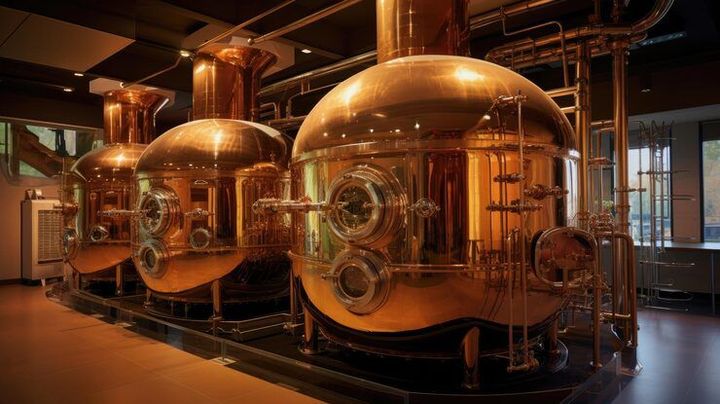
The technology has been used for centuries, but modern industrial distillation systems are considerably more controlled and automated. Common equipment includes distillation columns, reboilers, condensers, trays, packing materials, pumps, valves, temperature sensors, pressure controls, and collection vessels.
Different configurations are selected according to the mixture and separation requirements. Common examples include:
- Fractional distillation columns
- Vacuum distillation systems
- Batch distillation equipment
- Continuous distillation columns
- Packed and tray columns
- Short-path and molecular distillation systems
These systems are found in petroleum refining, chemical processing, pharmaceutical manufacturing, food processing, solvent recovery, and specialty chemical production.
Why Industrial Distillation Matters
Distillation remains important because many industrial mixtures contain components that must be separated or purified before further processing. The quality of separation can influence product consistency, downstream processing, energy use, and plant operation.
Industries using chemical separation equipment may process mixtures with significantly different physical properties. Distillation provides a practical approach when boiling-point differences are suitable for separation.
The technology also affects environmental and operational performance. Conventional distillation can require substantial thermal energy, which has encouraged research into energy-efficient distillation, heat integration, advanced column designs, and process intensification.
A typical system includes several connected stages:
- The reboiler supplies heat to the liquid mixture.
- The column provides repeated vapor-liquid contact.
- Trays or packing improve contact between phases.
- The condenser converts overhead vapor into liquid.
- Reflux returns part of the condensed liquid to the column.
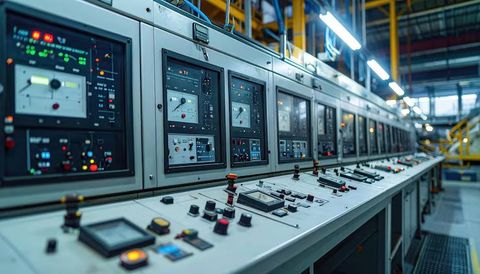
- Control instruments regulate temperature, pressure, and flow.
Recent Developments in Distillation Technology
Energy efficiency has become a major research focus because distillation is among the energy-intensive operations used in chemical and petrochemical processing. Recent research increasingly examines intensified distillation, hybrid separation systems, improved heat integration, and configurations that can reduce unnecessary energy demand. A September 2026 research publication specifically reviewed intensified distillation approaches for improving industrial sustainability.
Digital monitoring is another important trend. Modern plants increasingly use process sensors, automated control systems, predictive analytics, and digital models to understand column performance and identify operating changes.
In 2026, regulatory attention also continued to influence chemical processing facilities. In the United States, the Environmental Protection Agency published a proposed Risk Management Program revision on February 24, 2026, addressing chemical accident prevention requirements.
These developments show that future distillation process technology is likely to focus on energy management, process safety, automation, emissions control, and improved separation efficiency.
Laws, Policies and Safety Requirements
Requirements depend on the country, chemicals involved, facility type, and operating conditions. In the United States, OSHA's Process Safety Management standard, 29 CFR 1910.119, applies to certain processes involving highly hazardous chemicals and specified quantities of flammable materials.
Distillation operations involving flammable substances can create hazards from heat, pressure, vapor release, fire, and explosion. OSHA guidance emphasizes appropriate process controls, pressure protection, overfill protection, and equipment designed for process upsets.
Environmental requirements may also apply. EPA rules for certain chemical manufacturing operations address volatile organic compound emissions from distillation process vents and equipment leaks.
Facilities should therefore evaluate applicable national, regional, environmental, workplace-safety, pressure-vessel, and hazardous-material requirements before operating or modifying distillation equipment.
Useful Tools and Resources
Several general resources can help users understand and evaluate industrial distillation systems:
- Distillation column design calculators
- Boiling-point and vapor-pressure databases
- Material-balance calculators
- Heat-duty calculation worksheets
- Process-flow-diagram templates
- Equipment sizing spreadsheets
- Process simulation software
- Safety assessment checklists
- Industrial chemical-handling guides
- Technical standards databases
These resources can help students, engineers, plant operators, and researchers understand separation principles and evaluate process conditions.
Frequently Asked Questions
What is industrial distillation equipment?
It is a group of process systems used to separate liquid mixtures based mainly on differences in volatility and boiling point.
What industries use distillation?
Distillation is widely used in petroleum refining, chemical processing, pharmaceuticals, food and beverage processing, solvent recovery, and specialty chemical production.
What is a distillation column?
A distillation column is a vertical process vessel where rising vapor and descending liquid interact repeatedly to improve separation between mixture components.
Why is vacuum distillation used?
Vacuum distillation lowers operating pressure, which can reduce boiling temperatures. This can be useful for materials that may degrade at higher temperatures.
Is distillation energy intensive?
It can be energy intensive because heat is required for vaporization and condensation. Heat integration, improved column configurations, and intensified separation technologies are being studied to improve energy performance.
Conclusion
Industrial distillation equipment remains a fundamental part of modern separation technology. Its applications range from petroleum and chemical processing to pharmaceuticals and food production. Current developments are increasingly focused on energy efficiency, automation, process intensification, emissions management, and safer operation.
Understanding column configuration, heat requirements, pressure conditions, material properties, and applicable regulations is essential for evaluating a distillation process. As industrial facilities pursue more efficient and controlled operations, advances in equipment design and process integration will continue to shape the future of industrial separation.
Disclaimer:
This article provides general educational information and should not be treated as engineering, regulatory, safety, or operational advice. Specific requirements vary according to the process, chemicals, equipment, facility, and applicable jurisdiction.